spiritual meaning of mountain Inspires Growth and Strength
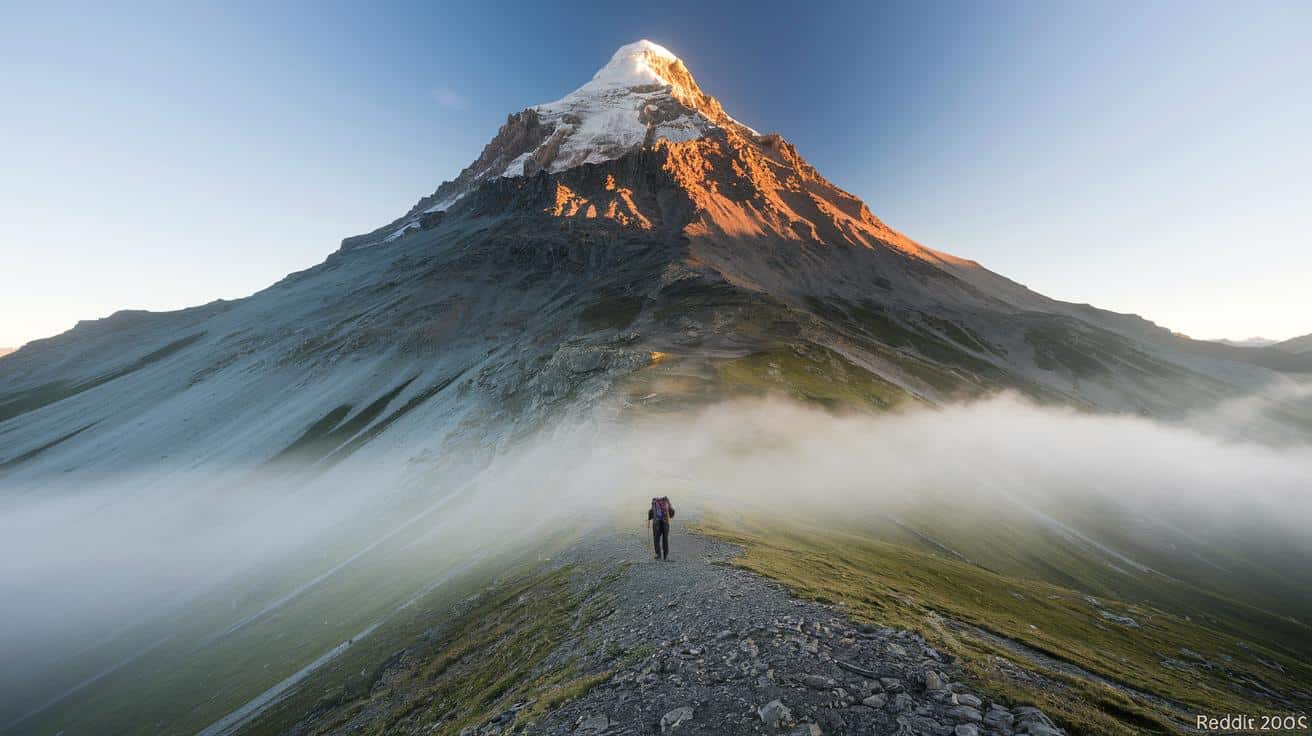
Have you ever stood at the foot of a mountain and felt your heart flutter as you looked up?
The cool breeze brushes your skin. Mountains feel alive, almost as if they’re calling you forward.
And it’s not just your muscles they challenge, it’s your spirit (your inner self) asking to grow. Oops, let me rephrase… Mountains are like gentle guides. They give you a rock-solid base when life shakes you and a quiet nudge when you’re ready to climb higher.
Have you ever paused on a trail, closed your eyes, and felt a wave of calm settle in? That’s the bridge between earth and sky. Rock-solid resilience (unshakable inner strength) meets gentle ascension (soft, steady progress), and suddenly you taste a peaceful insight you didn’t know was there.
So let’s wander together and discover how the mountain’s wisdom can help you stand firm, rise softly, and find that still-point of calm inside. Namaste.
Core Spiritual Symbolism of Mountains

- Strength as a rock-solid foundation
- Elevation as spiritual ascension (rising to a higher state of awareness)
- Communion as a meeting of heaven and earth
- Balance as the gentle dance between effort and rest
Have you ever brushed your hand against a sun-warmed boulder? The mountain’s rough skin feels unshakeable, as if it could steady your spirit on the windiest day. It’s like finding a friend who never quits.
Peaks teach us to stand tall. They’ve weathered rain, wind, and age, um, showing us resilience in action. When their tips glow in sunrise light, they whisper promises of calm insight.
Their ridges slip into the clouds like a secret bridge between earth and sky. That meeting of heaven and earth invites a deeper connection that’s, like, the whole point of mountain communion. It gently nudges us to sense something larger than our daily tasks.
Slopes tilt just enough to show balance (a gentle dance between effort and rest). When you pause on a narrow ledge or sip cool stream water, you match your own rhythm to nature’s. Then you carry that quiet steadiness into your day like a little secret.
The Ascent: Process and Practice

Have you ever hiked up a rocky path and felt every footstep pulse with your heartbeat? Climbing a mountain can turn our daily routines into vivid journeys. The soft hiss of wind and the warmth of the sun on our faces make the climb feel alive. Each moment echoes how we balance effort and stillness.
When you wake from a dream about climbing a mountain, you might sense a call to notice shifts inside you. That dream is like a gentle guide, nudging you to be fully present in the moment.
Oops, let me rephrase that, it’s an invitation to mix your goals with quiet awareness. Think of intention setting (deciding why you climb) as planting a seed in your heart. Then steady discipline (keeping a gentle pace) helps the seed stretch toward the sky.
- Intention setting: defining why you climb
- Steady discipline: pacing each step
- Adaptive response: shifting with terrain
- Maintaining presence: steady breaths
- Integrating insights at plateaus
Next, bring these steps into your everyday life. In the morning, whisper your summit pledge, your aim for the day. At midday, pause and take three mindful breaths, feeling the rise and fall of your chest. Even folding laundry can become a mindful ascent when you notice the gentle hum of fabric sliding through your fingers.
But wait, um, is this all just about chores? Not at all. It’s a way to carry mountain strength with you, whether you’re at home or on a real trail.
Namaste.
Mountain Symbolism Across Religions and Myths

Mountains speak in silence, you know? They stand tall and still, like old friends listening to our thoughts. C.G. Jung, the Swiss psychiatrist, once called them “the essence of God” after visiting Mount Rigi.
He felt a soft hush off the frost-tipped peaks, and his busy mind finally slowed. Have you ever found your breath catching at the sight of a snowy ridge?
In Tibetan Buddhist circles, Sherpas see Mount Everest, or Chomolungma, as the home of goddess Miyolangsagma. Prayer flags flutter in the wind, each bright cloth honoring her presence. Climbers believe that one impure thought could disturb her mountain court. So before setting off, they offer katas (ceremonial scarves) to keep balance and avoid mishaps.
In the Bible, mountains become divine meeting spots. Oops, let me rephrase… they’re sacred stages where heaven meets earth. Moses climbed Mount Sinai and received the Ten Commandments. And Jesus found a quiet hill for his Sermon on the Mount, sharing lessons of love.
In Hindu stories, Mount Meru stands at the universe’s heart, a vibrant bridge between gods and mortals. Over in Europe, Swiss peaks like Jungfrau (The Virgin), Eiger (Ogre), and Mönch (Monk) carry names that echo purity, challenge, and quiet devotion.
In many Native American traditions, mountains are life’s source, you know? A Pueblo elder once asked, “Don’t you feel that all life springs from these silent giants?” Rocky peaks send down rivers that nourish forests and communities far below. These legends teach us to walk gently above, since even a small carelessness on high can ripple across whole valleys.
Interpreting Mountains in Dreams

Have you ever dreamt of a mountain looming before you? It’s an invitation to climb higher in your spirit (spiritual ascent). You might feel rough stones under your fingertips or hear wind swirling around your ears. Notice how your heart leaps or trembles, mirroring your waking hopes.
When the mountain trembles in your dream and a yellow liquid oozes out, it’s like witnessing the alchemical citrinitas stage (inner glow turning to gold). Oops, let me rephrase. It’s a sign your spirit is shifting and ready for something new.
And when a mountain crumbles, it might reflect fears of failure or losing control. But facing that shake-up can help you find new strength. Next, when you wake, jot down these dream details so you can spot patterns between your nights and days.
Each mountain image offers a moment to steady your spirit before your next climb. Namaste.
Meditation and Mindfulness with Mountain Energy
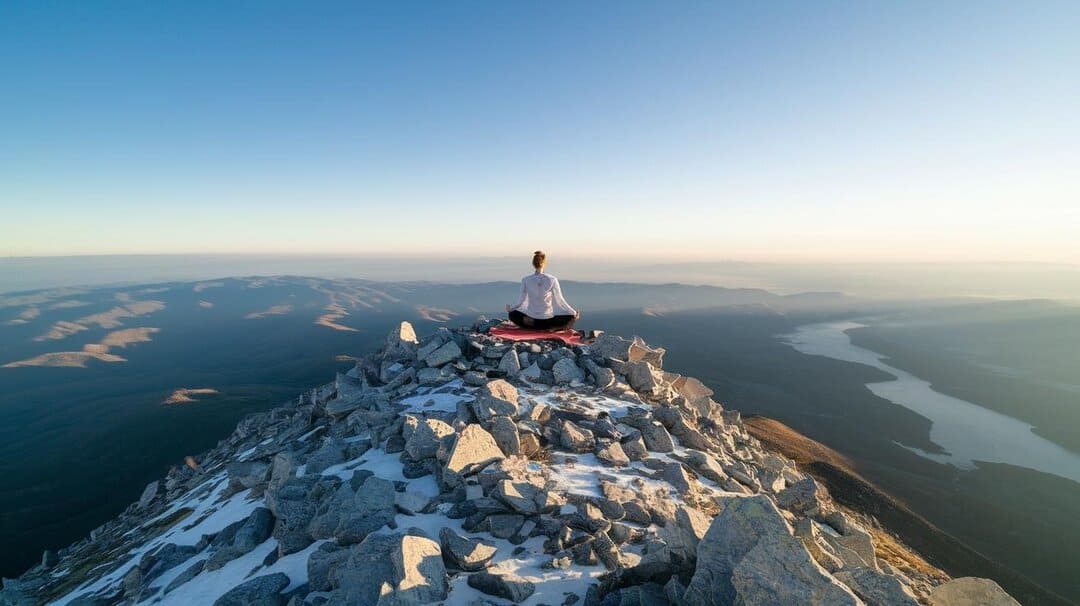
Close your eyes and feel the crisp breeze brushing your cheeks. Settle onto a smooth rock ledge. Listen to the soft rustle of wind through pines. Um, it’s like the mountain is whispering a welcome.
This mountain meditation (a mindful practice using the calm strength of mountains) invites you to connect with the gentle hum of divine feminine energy (the nurturing force) and the cosmic life force (the universal energy flowing in all things). Have you ever sensed a vibration in a stone? That’s the mountain’s song.
Notice how the peak shines like a bright threshold, light and high, while the valley below feels heavy and deep. Think of the mountain as an upside-down tree. Its axis mundi (a bridge between earth and sky) links strong roots to open heavens. It reminds you that the universe keeps expanding and starting anew.
Take a quiet moment to ask yourself: What does standing on a silent mountaintop reveal about your breath and heartbeat? Breathe in. Feel your chest rise. Breathe out. Notice your pulse. Yes. That’s your own sacred rhythm.
Then imagine sinking into a cool, shadowed hollow. Soft stones under you. The air is hushed. Feel mountain solitude (spiritual growth from alone time with nature) as your thoughts soften and your spirit lines up with earth, air, and stone. Oops, let me rephrase… you find calm in the mountain’s embrace.
When you’re ready to deepen this practice, consider planning a mountain retreat. A simple weekend of silent walking along ridges can spark fresh insights and steady your spirit. Next, you might journal by candlelight under the stars, letting each word flow like mountain water.
In truth, even short time on these heights can plant seeds of clarity that keep growing long after you head home. Namaste.
Practical Applications
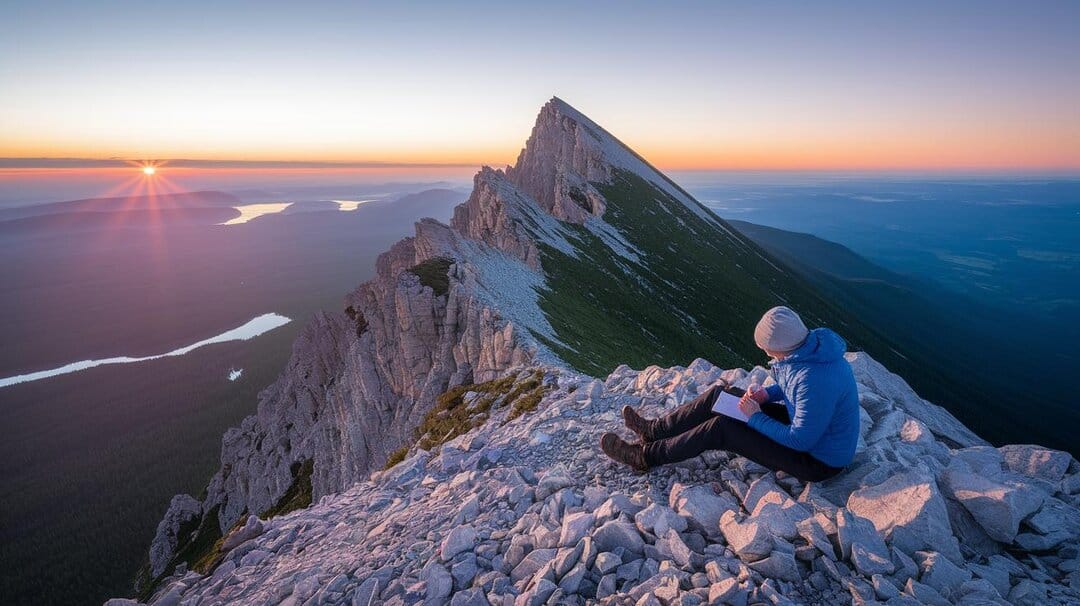
Describe a time you faced a steep challenge and felt as rooted as a mountain (steady, unshakable).
Reflect on a moment when you paused on a calm ledge (a gentle balance point).
Map a goal as a contour line (an imaginary path tracing a mountain’s shape), noting each twist and gentle rise.
Write about how nature’s quiet strength, like the soft hush of pine needles, helped you stand firm under pressure.
Breathe deeply, picturing a peak rising with each inhale and settling on the descent.
Take a slow walk outside, noticing each step as part of your own inner climb.
Draw a simple mountain outline, then place today’s intentions like little flags along its ridges.
Pause at midday to imagine standing on sun-warmed stone, feeling solid ground beneath your feet.
In truth, you can gently weave these moments into your day. Each morning, pick one journaling prompt. By the afternoon, try one of those simple exercises. Oops, did I say “simple” twice? I guess I meant easy to fit in.
When doubts creep in or tasks pile up, recall your mountain wisdom. Let it guide your breath, your posture, your words. Set a tiny alert to pause for a quick contour-line sketch or a mindful climb with each cup of tea. Soon, you’ll feel that steady beat of resolve, like a quiet summit always within reach.
Iconic Sacred Peaks and Their Spiritual Messages

Mount Sinai (Egypt)
Have you ever climbed a mountain by lantern-light? On Sinai’s steep granite slope, each step crunches underfoot and the cool night air brushes your skin. Pilgrims whisper prayers around the burning bush site (where Moses heard God speak from a bush that blazed without burning). It’s humbling and quiet at the summit.
Mount Fuji (Japan)
Climbers set off on the Yoshida Trail in the wee hours, the cold wind carrying the scent of pine. They pause at the eighth station, watching dawn’s first glow spill over the peak. Local lore says Fuji’s mirror-like lake (a crater lake that perfectly reflects the sky) shows your true self when the morning mist lifts. Magical, right?
Mount Kailash (Tibet)
Devotees walk a 52-kilometer kora (circumambulation–walking around a sacred site), their voices joining in simple mantras (sacred chants). Bright prayer flags rustle above as they step, step, step. It’s believed one clockwise circuit wipes away a lifetime of regrets - a promise that draws seekers from Hinduism, Buddhism, Jainism, and Bon. Oops, did I say regrets? I mean old mistakes.
Ol Doinyo Lengai (Tanzania)
At this “Mountain of God,” the Maasai gather ash from its dark volcanic soil, which they say holds ancestral memory (the stories and wisdom of ancestors). I once watched elders lightly sprinkle ash on children’s brows - eyes twinkling as little ones drifted toward dreams of protection. You could feel the soft hum of faith in the air.
Softly glowing lessons. Each of these peaks offers a living example of devotion and self-reflection. They guide us up toward our own mountaintop revelation. Which mountain is calling your name?
Final Words
We began by exploring four mountain metaphors: strength, ascension, communion, and balance.
Then we traced the spiritual journey as a climb with intention, discipline, adaptation, presence, and integration.
We visited myths from Jung to Sherpas, dug into mountain dreams, and offered meditation prompts, journaling cues, and mindful moves.
Oops, that was a lot. Just like a steep trail.
Keep trusting the spiritual meaning of mountain as a gentle guide, helping you feel steady and lifted with each step. May your inner mountain always remind you of calm strength.
FAQ
What is the spiritual meaning of mountains in the Bible?
The spiritual meaning of mountains in the Bible signifies sacred encounters with God, places of revelation, enduring strength, and reminders of faith’s ability to lift us above daily struggles.
What do mountains represent in life?
Mountains represent life’s challenges and triumphs, symbolizing obstacles to overcome, steady growth, and the higher viewpoint we gain by persevering through trials.
Which mountains are listed in the Bible and is a PDF available?
The mountains listed in the Bible include Sinai, Zion, Gerizim, Moriah, Carmel, Nebo, Ararat among others, and a PDF with 12 key peaks can be found online at reputable theology sites.
What is the spiritual power of mountains?
The spiritual power of mountains arises from their steady presence, evoking inner resilience, offering quiet spaces for prayer, and inspiring us to elevate our perspective beyond daily concerns.
What does God say about mountains?
The Bible says God places mountains as markers of covenant, moves them for the faithful, and invites us to trust that with divine support, seemingly immovable barriers can shift.
How are mountains used in sermons on the Bible?
Mountains are used in sermons to illustrate God’s revelations on peaks like Sinai, faith-testing moments, and spiritual elevation, guiding listeners to understand perseverance and divine encounters.
How is mountain symbolism used in literature?
Mountain symbolism in literature often mirrors inner struggle or transformation, depicting characters’ challenges, quests for truth, and moments of transcendence as they rise toward higher understanding.