What Losing One Earring Can Mean Spiritually
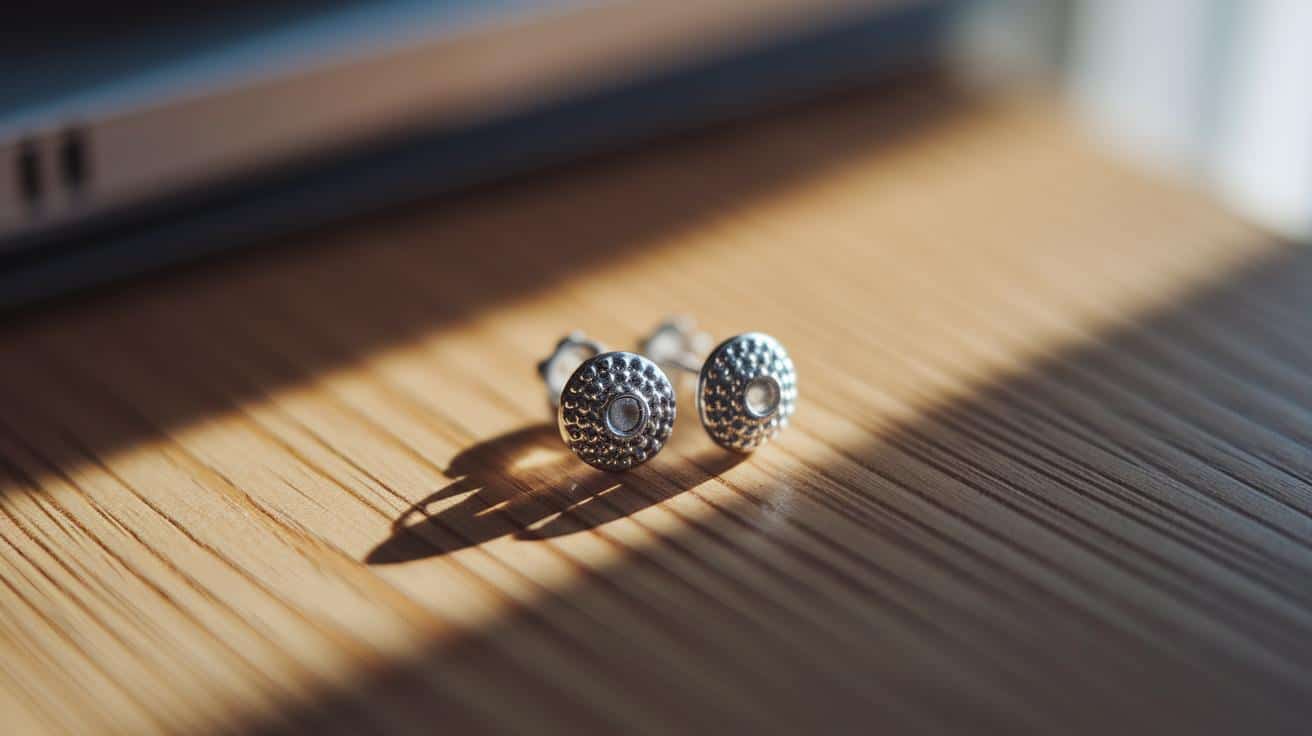
Losing one earring can become a personal symbol of change, attachment or a fresh start. It can also be an ordinary mishap involving a loose back or a snagged scarf. There is no reliable spiritual rule that makes a missing right earring good news or a missing left one a warning.
I like to begin with the feeling the loss brings up. Annoyance, sadness, relief and nostalgia can all tell you something about the object’s place in your life. You can take those feelings seriously without treating the accident as a message you must follow.
First, give yourself a chance to find it
Put the remaining earring somewhere secure so you do not lose it during the search. Think back to the last time you know you had both earrings, then check the places and clothing involved. A collar, scarf, bag lining or bedding may be worth looking through carefully.
Use good light and search one small area at a time. If you were in a shop, workplace or venue, contact its lost-and-found with a description or photograph. Take a break if you are becoming frustrated; reflection does not require giving up a reasonable search.
If you find the earring, check its fastening before wearing it again. A jeweler can assess a loose back, bent post or damaged clasp. If it stays missing, you can keep the remaining piece, ask about a replacement or consider a different use for it. None of these choices carries a spiritual penalty.
What the loss might bring to mind
Attachment and memory
An earring may hold a memory of a person, celebration or period of your life. Losing a gift can bring guilt as well as sadness: “They chose this for me, and I should have protected it.” Yet an accident does not measure how much you value the giver. The care in the relationship is larger than the object.
You might write down the memory the pair holds, save a photograph or tell the giver what happened if that feels appropriate. You do not need to erase your sadness or invent a reason the loss was meant to happen.
A change in identity
Jewelry can be part of how you recognize yourself: a favorite style, a family connection or something you wore during a particular chapter. If the loss makes you notice a change in your taste or priorities, explore that gently. You can choose a new style without deciding your old self was wrong.
Self-kindness and a small beginning
Sometimes the useful lesson is simply to respond to a mistake with less criticism. Ask what would help now: a better storage habit, a repair or permission to stop searching for the evening. A fresh start can be that small.
The related experience of losing a ring may bring up different promises or family associations. Let the particular object and your relationship to it shape the reflection.
Right earring versus left earring
You may encounter interpretations that connect the right side with action and the left with inward attention. These are symbolic associations, not a dependable way to predict events or judge a relationship. They also do not become more reliable because the wearer is a woman.
| What happened | An optional question | A practical check |
|---|---|---|
| The right earring is missing | Is there a small action I already want to take? | Check the fastening and clothing that brushed that ear. |
| The left earring is missing | What feeling would I like to acknowledge? | Check the fastening and the places you changed clothes. |
| The same side keeps coming loose | Am I blaming myself for a fixable problem? | Have the fit or fastening assessed before wearing it again. |
You can ask either reflection question regardless of the side. Repeated loss is a reason to inspect the jewelry and routine; there is no special threshold of two or three losses that proves spiritual interference.
The number one and choosing a next step
In numerology, one is often associated with beginnings and independence. If you enjoy that framework, use the single remaining earring as a reminder to choose one manageable action. Send the message you have already decided to send, organize a drawer or make time for a needed conversation.
The number does not grant permission to ignore someone else’s boundaries or make a major decision on a hunch. A small choice should still make sense on its own.
Biblical and cultural context
In Genesis 35:4, foreign gods and earrings are handed to Jacob and buried near Shechem. This is a specific religious narrative, not a rule that an accidentally lost earring signals punishment, mourning or a broken promise.
A family’s earrings may be connected with marriage, inheritance or a coming-of-age celebration. Ask about that particular history if it matters to you. Broad labels such as “Eastern,” “Western” or “Indigenous” cannot supply one meaning for every community’s jewelry or every loss.
A gentle reflection you can do at home
- Settle somewhere comfortable. Breathe normally and give yourself a moment.
- Name the feeling. “I am disappointed” is enough; you do not need a spiritual explanation.
- Write what the earring meant. Was it a gift, a favorite design or an ordinary part of getting dressed?
- Separate the object from the bond. What memory, promise or affection remains even if the piece does not return?
- Choose one kind next step. Search later, ask for a repair or put the remaining earring away.
You can hold a photograph instead of the jewelry or use a small lamp as a focus. There is no need to burn herbs or paper, buy crystals, leave offerings or perform a ritual within a certain number of hours.
For another kind of loss, our guide to losing a bag considers the feelings attached to belongings and everyday routines.
Care for the earring you still have
A symbolic cleanse does not require physically soaking jewelry. Ask a jeweler about the particular metal, stones, treatments and setting before using a cleaning method. Avoid treating salt water, smoke or a household cleaner as a universal solution.
The Gemological Institute of America’s jewelry-care guide explains that heat, chemicals and some cleaning methods can damage jewelry. It recommends suitable storage that protects pieces from scratches. Keep the remaining earring in a secure, appropriate box or pouch and follow care instructions for its materials.
Dreams and recurring worry
If the earring was lost in a dream, note what happened and how you felt. Were you searching, relieved to remove it or worried about telling someone? A dream can invite questions about memory and attachment without predicting an actual loss.
If worry is affecting your sleep or daily life, consider talking with someone you trust or a mental-health professional. You do not need to solve an omen to deserve support. If you later find someone else’s jewelry, the found-ring guide raises the separate question of helping a lost object reach its owner.
An incomplete pair does not make you incomplete. Whatever happens to the earring, you can keep the memory, care for what remains and decide your next step in your own time.
Questions about losing an earring
What does losing one earring mean spiritually?
You may use the loss to reflect on change, memory or attachment. It does not reliably predict an event or prove a supernatural message.
Is losing a left earring a warning?
There is no reliable rule that a missing left earring warns about relationships. Check the jewelry and circumstances, and treat any symbolism as optional reflection.
Does losing a right earring mean good luck?
A missing right earring does not guarantee good luck or show that a decision is correct. You can reflect on a next step that already makes practical sense.
Does the Bible explain an accidentally lost earring?
Genesis 35:4 mentions earrings in a specific narrative about Jacob and foreign gods. It does not give a universal interpretation for accidentally losing one.
Should I cleanse the remaining earring in salt water?
Do not use a universal salt-water cleanse. Ask a jeweler about the materials and setting; symbolic reflection can use a photograph without physically treating the jewelry.
What if the earring was a sentimental gift?
It is understandable to feel sad or guilty. Losing the object does not erase the affection or memory it represents, and you can choose a kind, practical next step.