Flour Symbolism: Nourishment, Scripture and Dreams
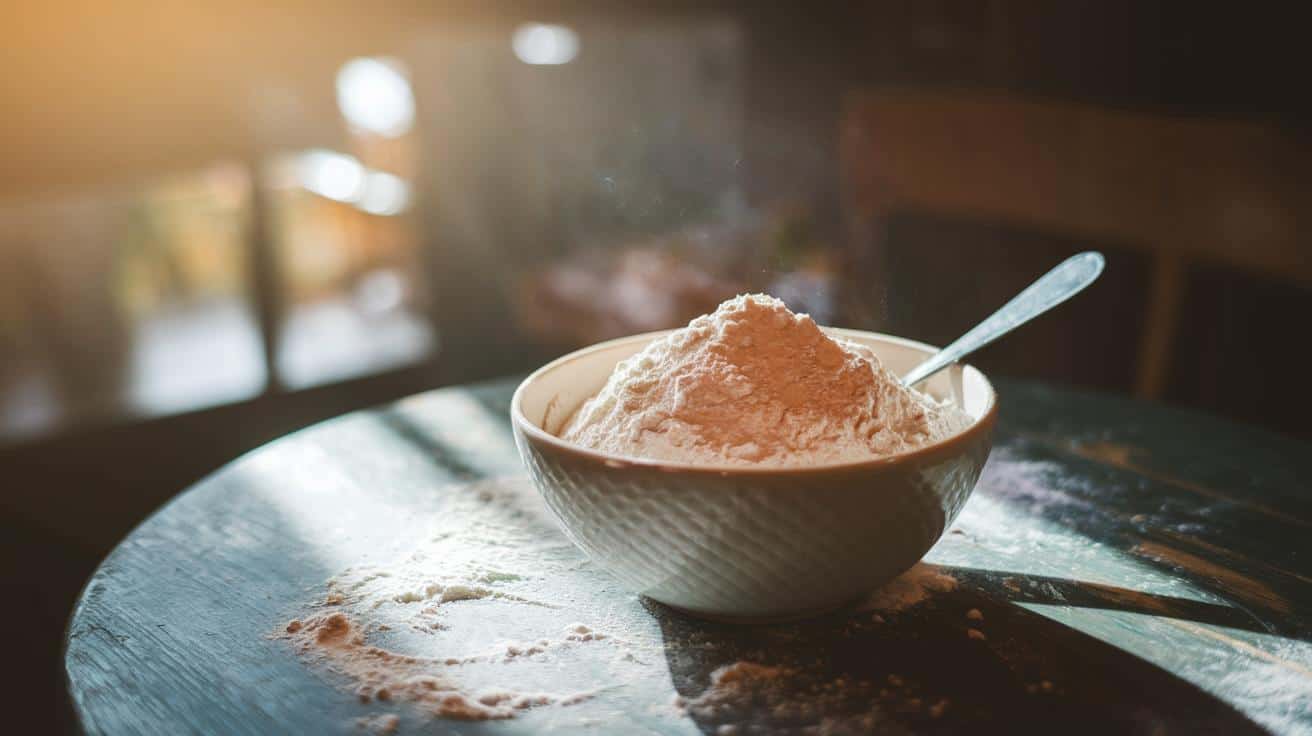
Flour can symbolize nourishment, potential and the patient work of making something useful. In a dream, it may invite you to think about what supports you, what you are preparing or how you feel about a mess. These are possibilities for reflection, not a promise of money, divine favor or a future event.
I find the kitchen image comforting because it starts so small. A bowl of flour is not yet a loaf. It needs other ingredients, attention and time. That can be a kind way to look at a beginning: you do not have to arrive finished.
Nourishment and the things that sustain you
Flour's connection with food makes nourishment a natural personal association. You might think of a family recipe, a meal someone shared or the ordinary work behind a stocked cupboard. Your experience matters more than a fixed meaning attached to white powder.
Abundance can mean noticing real support, including help you are allowed to ask for. It does not mean an empty pantry will fill because you perform a ritual. If food or money is short, practical assistance matters; a symbolic exercise should never make hardship feel like a failure of belief.
Try asking, “What has sustained me this week?” An answer might be a person, a routine, a place to rest or a meal. Then ask what is still missing. Gratitude and an unmet need can both be true.
From flour to dough: a picture of patient change
Mixing, kneading and baking can offer a metaphor for turning an intention into action. Different ingredients contribute different things. Resting can be part of the recipe. A loaf takes more than wishing, just as a project needs workable steps and support.
Not every dough rises, and not every recipe asks for kneading. Let the food stay real even while you enjoy the comparison. Spiritual growth does not have one required pace or shape, either.
If you bake, choose a familiar recipe and follow its instructions. While waiting for the finished food, write down one small step toward something you care about. You might send a question, gather a tool or make space in your week. The reflection works just as well beside a drawing of a loaf if baking is not for you.
What flour means in the Bible
The widow's flour and oil
In 1 Kings 17:8–16, Elijah meets a widow at Zarephath who has very little food left. The story describes her flour and oil lasting through the drought as the Lord had promised through Elijah. It is a particular account of provision during hardship, not a claim that every believer's kitchen jar will stay full forever.
A reader may find hope or a question about hospitality in this passage. It should not become pressure to give away necessities or a guarantee that a donation will bring wealth. Notice the widow's vulnerability as well as the provision in the story.
Grain offerings
Leviticus 2 describes grain offerings that include flour, oil and frankincense, along with baked preparations and specific instructions. Read these in their textual and religious setting. An ancient offering is not a modern instruction to put kitchen flour on a charcoal burner.
These passages can inform a Christian or Jewish reader's reflection, but they do not provide a universal dictionary for flour dreams. Nor do they mean that every culture's grain tradition expresses the same belief. If a practice belongs to your family or community, learning its particular story is more useful than treating all flour rituals as interchangeable.
Flour in dreams: start with the scene
A flour dream does not have one certain spiritual or prophetic meaning. Begin with what actually happened and how you felt. A cheerful baking scene and an upsetting spill may use the same ingredient while bringing up very different associations.
| Dream detail | An optional reflection | A question to try |
|---|---|---|
| Buying or carrying flour | Preparing, gathering resources or taking on a task | What am I getting ready for, and what help do I need? |
| Mixing or kneading dough | Practice, cooperation or work in progress | What am I actively shaping? |
| Smooth or sifted flour | A wish for order, ease or readiness | Did the neatness feel comforting, demanding or unimportant? |
| Clumpy flour | Something awkward or unfinished | What feels harder to work with than I expected? |
| Spilled or scattered flour | A mistake, wasted effort, playfulness or a change of plan | How did I respond to the mess? |
| Baking with someone | Shared work, memory or a relationship | Who was there, and what did their presence mean to me? |
These prompts are not diagnoses. Smooth flour does not prove emotional balance; clumps do not establish hidden anxiety. White flour does not certify purity, and a spilled bag does not predict loss. Your personal association might simply be yesterday's shopping or a recipe you want to try.
Record the setting, people, action and feeling before reaching for an interpretation. Then consider two possible explanations, including an ordinary one. Choose a small helpful action only if the reflection connects with your waking life. You do not need to act on a dream because it felt vivid.
For other kitchen images, our reflections on popcorn and egg yolks in dreams explore different objects and scenarios. A shared theme of growth does not make every food symbol mean the same thing.
Keep flour practices safe and simple
Flour is a raw food. The FDA's flour-safety guidance explains that it can contain harmful bacteria. Do not taste raw flour or dough, and do not use untreated flour for children's play dough or crafts. Follow a tested recipe or package cooking instructions, and wash hands, utensils and work surfaces after handling it.
Skip flour pastes for skin, cleansing circles on floors and powders scattered around a room. Do not burn flour, add it to incense or toss it toward candles or a burner. OSHA lists flour among combustible dusts; airborne flour and ignition sources are a poor combination.
You do not need loose food or a flame to make a meaningful pause. Draw a bowl on paper, write a few words of thanks or share properly cooked food with someone who can safely eat its ingredients. Keep food allergies and dietary needs in mind when giving a baked gift.
A short reflection you can return to
- Name what is here. Write down one resource you already have.
- Name what is needed. Be specific about a missing ingredient, skill or kind of support.
- Choose one step. Make it small enough to do without waiting for a sign.
- Allow time. A beginning can be valuable while it is still unfinished.
Among the many symbols people reflect on, flour offers an especially ordinary invitation: care for what sustains you, appreciate the work behind it and leave room to begin again.
Questions about flour symbolism
What is the spiritual meaning of flour?
Flour can symbolize nourishment, potential and patient change because of its role in making food. These are personal interpretations, not guarantees of abundance or divine favor.
What does flour in a dream mean?
Consider the action, setting and feeling: buying flour may suggest preparation, while kneading may bring work in progress to mind. There is no certain meaning shared by every flour dream.
Does spilled flour mean bad luck?
A spill does not establish that bad luck is coming. Clean up a waking spill safely; in a dream, consider your feelings about mistakes, mess or changed plans.
What do flour and oil mean in the Bible?
In 1 Kings 17, the widow’s flour and oil last through the drought. Leviticus 2 describes grain offerings with oil. These specific passages do not promise an endlessly full pantry or predict a dreamer’s future.
Can I use flour for incense or a cleansing ritual?
Do not burn flour, mix it into incense or scatter it near flames. Raw flour also has food-safety risks. Use a drawing or written reflection instead of a loose-powder ritual.
Does dreaming of white or clumpy flour reveal my emotional state?
Neither appearance diagnoses your emotions or spiritual condition. Use it as an optional prompt and consider everyday memories as well as symbolic associations.