The Spiritual Meaning of Black-Eyed Susan
The spiritual meaning of black-eyed Susan is often expressed through hope, resilience, and steady growth. Its yellow petals and dark center make an inviting image for holding brightness and difficulty together. I like that the flower does not need to erase the darker part to look beautiful. You can use that contrast for personal reflection without treating it as a promise of protection or a message about the future.
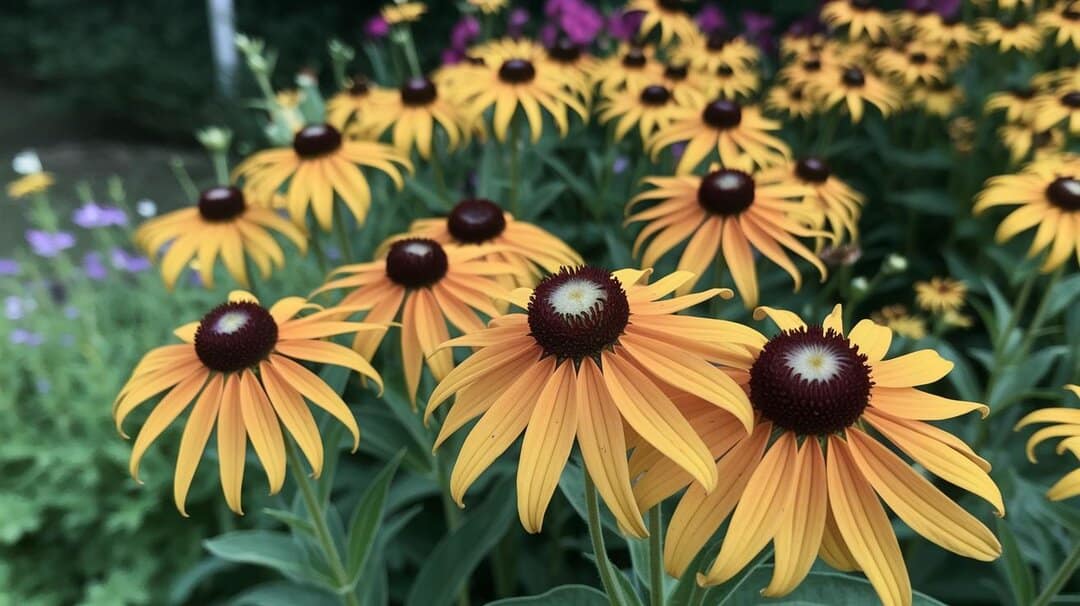
Hope and strength in the same flower
When a black-eyed Susan catches your attention, start with what you actually notice. Perhaps it is the bright color, the firm-looking center, or the way several stems lean in different directions. Your response can be ordinary: pleasure, curiosity, a memory of someone's garden. It does not have to become a spiritual sign.
If symbolism feels useful, the petals can represent openness and the center a sense of steadiness. Together, they offer a question: “What helps me stay open while keeping my footing?” That is a gentler starting point than insisting that resilience means feeling cheerful all the time.
- Hope: noticing something worth caring for, even during an uncertain season.
- Resilience: making room for rest and support as well as effort.
- Growth: allowing your pace to change as circumstances change.
- Balance: acknowledging difficulty without letting it fill the entire picture.
These are reflective associations, not a universal flower language. Another person may connect the same bloom with a childhood home or a friend. The personal memory can matter more than any list of meanings.
Yellow petals, confidence, and chakra imagery
Some modern spiritual practices connect yellow with the solar plexus chakra and confidence. If that framework is part of your practice, you might picture the petals while considering a decision you want to approach with more care. The association is symbolic; the flower does not have a demonstrated ability to clear an energy blockage.
Try looking at a flower or a picture for a few comfortable breaths. Notice its color, then name one small action you can take. You might ask for clarification, begin a task, or say that you need more time. There is no particular sensation you must produce and no need to hold a bloom against your body.
Five simple reflection practices
- Watch a growing stem. Return to the same plant over several days. Notice buds, open flowers, and fading blooms. Let each stage prompt a question about what currently needs attention in your own life.
- Draw the contrast. Sketch yellow petals around a dark center. Write a present challenge beside the center and a source of support beside a petal. The aim is to see both clearly.
- Make a quiet display. Place a drawing or garden flower beside a notebook. If you enjoy crystals, a piece of citrine, amethyst, or clear quartz can be a decorative reminder of your chosen intention. It does not guarantee safety or amplify a prediction.
- Take an attentive walk. Notice your steps and the flowers around you without needing to pick them. Pause when something draws your eye. A short walk can simply be a chance to observe.
- Choose a realistic affirmation. Write it on a paper leaf and keep it beside your picture. “I can take one manageable step” leaves more room for a difficult day than a demand to feel strong.
You can use one practice and leave the others. A ritual becomes useful through the attention you give it, not through getting a sequence exactly right. If visualizing golden petals feels comforting, try it; if it feels forced, looking out of the window is enough.
Journal prompts and a small keepsake
The original image of bright petals around a dark center lends itself to a simple journal page. Date the entry, write what is happening, and try one of these questions:
| Theme | Question |
|---|---|
| Resilience | When have I met a difficulty, and what support helped? |
| Joy | What brings me a little pleasure without needing to solve everything? |
| New beginnings | What opportunity am I curious about, and what would a first step look like? |
You might list three things you appreciate before beginning the day. On a hard morning, one is enough. A pressed garden petal, a photograph, or your own drawing can become a keepsake beside the words. Looking back later may help you notice changes that were difficult to see day by day.
For another flower-based reflection, our guide to daisy symbolism explores fresh starts and personal associations. If the image appeared while sleeping, sunflower dream reflections offer a related way to examine a dream's setting and feelings without assuming every yellow flower means the same thing.
Growing a flower and following its actual needs
Black-eyed Susan commonly refers to Rudbeckia hirta. NC State Extension's plant guide describes it as a biennial or short-lived perennial that can bloom in its first year. It recommends full sun to partial shade and moist, well-drained soil; the flowers attract pollinators, and the plants can self-seed.
Choose growing advice for your local conditions and the plant you have. Do not assume that every variety will behave as a long-lived perennial or bloom on the same calendar. Tending a living plant means responding to its needs, which can be a satisfying practice in attention by itself.
If you make a seasonal display, change a drawing or add a garden note as the plant develops. There is no need to collect wild flowers, add flames, or turn a garden task into an elaborate ceremony.
The poem, tattoos, and claims about tradition
The poem often associated with the name is John Gay's Sweet William's Farewell to Black-ey'd Susan, published in 1720. It tells of Susan and a sailor parting, with promises of faithful love. Here Susan is a person; the poem itself does not establish a botanical origin story or a universal meaning for the flower. A song with the same name also needs its own attribution rather than being assumed to describe a plant ritual.
A black-eyed Susan tattoo can express a personal connection to hope, a garden, or a season you have lived through. You get to choose the meaning; there is no single interpretation that every wearer must share.
Stories about tribal healing, soldiers' protective charms, or Christian flower meanings need specific reliable sources. I would not assign those claims to a community simply because they appear in a modern symbolism article. Nor does a spiritual association establish that a tea, poultice, or flower essence treats illness or grief. These practices can stay with pictures, observation, and writing.
Our spiritual meaning collection offers other objects and images to reflect on. With this flower, you might end with a modest question: what am I ready to tend today?
Questions about black-eyed Susan symbolism
What does a black-eyed Susan symbolize spiritually?
It can represent hope, resilience, balance, and growth. These are personal or modern symbolic associations, not a universal message or a prediction.
How can I use the flower in a reflective practice?
Try observing a plant over time, drawing its contrasting petals and center, writing a realistic affirmation, or keeping a short gratitude journal. A picture works as well as a picked flower.
Does black-eyed Susan have spiritual healing powers?
A symbolic connection does not establish medical effects. The practices here use observation, pictures, and writing; they do not recommend teas, poultices, or flower essences as treatment.
What does a black-eyed Susan tattoo mean?
It may express hope, resilience, a garden memory, or another personal connection. Its meaning belongs to the wearer rather than a fixed flower dictionary.
What is the black-eyed Susan poem?
John Gay’s Sweet William’s Farewell to Black-ey’d Susan, published in 1720, describes a woman and a sailor parting. It concerns faithful love and does not itself establish the flower’s naming history.